
Coming Soon
⋆
Coming Soon ⋆
What’s in a name?
My grandmother would always use the term bide your time in so many ways and life’s applications.
Our familiy was well traveled up and down the coast of Labrador. Grandma was from Okak in the Torngat Mountains. The Spanish flu ended their community. She grew up near Davis Inlet until she met my grandfather who was born in Cartwright.
They would always say when we traveled as we would have to make camp or stay with others on our travel, “I guess, we will bide here for a bit now.”
If any of us kids were bad, which we were on times, grandma was the strong woman and discplinary person in the family. She would make us sit where she chose and demand that we bide our time right there until she said we could move again.
She was a fantastic woman. So strong and taught me so much to prepare me for life. She was actually the last surviving person on this planet that was born in Okak.
If you want to learn more, there is a documentary titled, “The Last Days of Okak”. She, along other family members, are featured in it. It’s a powerful and sad story about what they had to do during their fight with the Spanish flu and what happened to them in their lives.
- Gerald Saunders, owner
My grandmother Hopkins was relocated from Partridge Bay. Each June and August, they would travel by boat for the fishery. One time, while travelling towards Cartwright someone asked her, “Going home, are ya?” She responded, “No, I am going to Cartwright - it’s my biding place. Seal Islands will always be my home.”
- Leona Saunders, owner
Our name represents the many shared stories of those who have visited Cartwright and the opportunities and experiences waiting here for them. So come in, relax, and bide your time.
An Historic Place
The property is over a hundred years old. The original house was owned by the Hudson Bay Company.
My great-grandfather worked for HBC and he lived in Cartwright - although, he did not live in this house. He worked at a place we call, “American Point”, I believe it was a trading outpost for HBC and also a cannery.
Family tragedy and other events compelled Freeman Saunders and my grandfather, a boy of less than 10 years old, up north to the original Davis Inlet. There he worked for HBC for many years until deciding to move to the Lake Melville area near Goose Bay in the 1940s.
After working a career for the Americans and raising nine children, my grandparents went back to Davis Inlet in their retirement. I went with them as a small boy and spent all of my summers at the original settlement of the Innu and where HBC had a post.
When we returned to Davis Inlet, the original HBC staff house was dilapidated. My older brother, sisters, and family fixed it up well enough for all of us as a family to use throughout the summers.
Our Davis Inlet house is in the same style as the The Biding Place. This design was composed by a man named Hayward Parsons and his brother. The Biding Place’s style was emulated for all HBC houses in the north.
- Gerald Saunders, owner
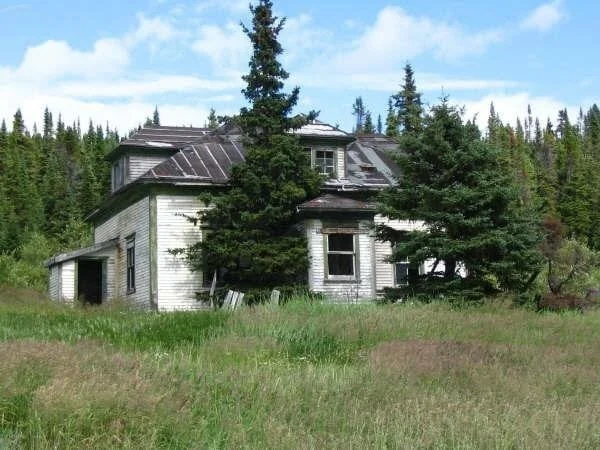
The Davis Inlet Property
A Mixed Past
While HBC was important for providing jobs and provisions in the area, it also had a negative reputation of being colonial and greedy.
Colonialism in Labrador has had deep and lasting impacts on Indigenous Peoples, including the Innu, Inuit, and Southern Inuit of NunatuKavut. Colonial policies disrupted traditional governance, seasonal movement, and land-based livelihoods through forced settlement, resource extraction, and restrictive regulations on hunting and fishing. Residential schools, relocations, and the imposition of external institutions contributed to cultural disconnection, language loss, and intergenerational trauma.
Today, Labrador’s communities continue to assert their rights, revitalize cultural practices, and engage in self-determination, while still facing the social and economic inequities rooted in colonial history. Understanding this context is essential to supporting reconciliation, community well-being, and a more just future in Labrador.
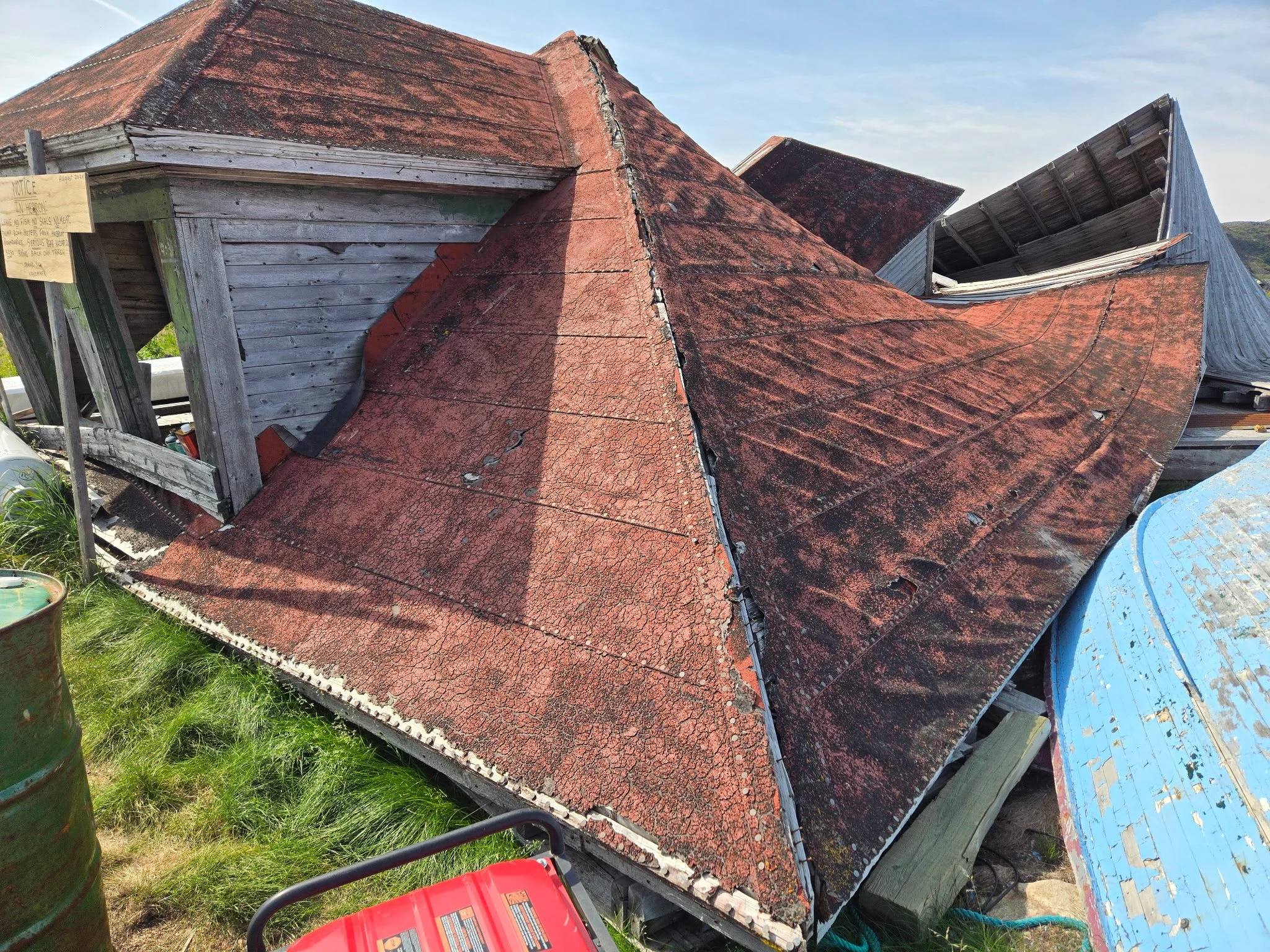
Former HBC Property in Hebron